Lightning and surge protection for switchboards and data lines
A lightning strike near a site, or a large motor switching off on the same supply, sends a transient along the mains and the data cables into equipment that tolerates only a short, small overvoltage. Drives, controllers and network equipment can fail, and the cause often shows up only in the repair bill. Our lightning and surge protection range allows the electrical contractor, switchboard builder or maintenance engineer to fit an electrical surge protector at each entry point to a building or switchboard that limits the transient reaching the equipment, from DIN rail units in a sub-board to high energy devices at the main switchboard.
Every unit is selected for the supply, location and cabling a site has, and we assist with equipment selection, demonstration and testing support, and technical support after the sale.
Lightning and surge protection
We offer a wide range of surge protection devices in Australia, including industrial surge protectors commonly found in switchboards, sub-boards and communications cabinets, which can be used to limit transient overvoltages on power, data and signal lines.
Neutral to earth monitoring
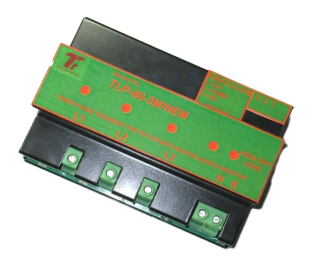
The TLP NEMON monitors the integrity of the earth-neutral connection in critical electrical systems.
Switchboard surge protection
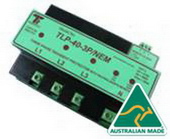
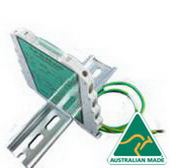
The TLP-P series are high energy DIN rail surge protectors for main switchboards and points of entry, CAT C types from 70 kA to 240 kA, in single phase and three phase versions. Status shows on dual colour LEDs, with a relay and a remote indicator output and, on some models, a Modbus output.
Three phase surge protector for sub-boards
The TLP-150 is a compact transient surge protector for sub-boards, in single phase and three phase CAT B types rated at 150 kA. It sits further into the installation than the main switchboard devices.
Power surge protection in series with the load
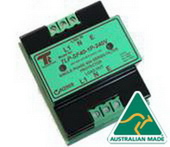
The TLP-SF slimline series are surge protectors and filters for CAT B locations, in 20 A, 40 A and 63 A ratings for single phase and three phase systems, from 24 kA to 120 kA. A low pass filter sits between the supply and the load, and the DIN style format matches the profile of most circuit breakers.
RS485 surge protector
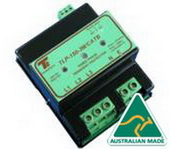
The RS-485 and 4-20mA surge protectors are for low voltage and bus applications in industrial instrumentation, covering CAT A and CAT B types from 8 kA to 48 kA.
RJ45 surge protector
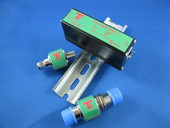
The TLP communications protectors cover RJ45, N-type and bulkhead connections. The RJ45 type protects Ethernet and twisted pair network cable by limiting the transient voltage between the conductors and the screen, and the N-type and bulkhead types suit coaxial antenna and radio lines.
Status monitoring accessories
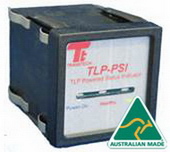
Remote panel indicators and a built-in Modbus interface module add status monitoring to the TLP range, so a tripped protector can be seen at the panel front or by a monitoring system.
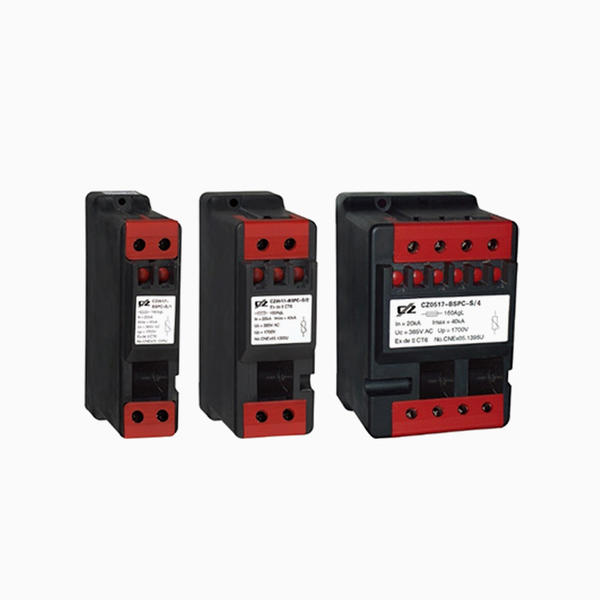
Explosion-proof surge protection
The CZ0511 explosion-proof surge protection device module is for hazardous environments, and its certifications are listed on the product page.
Comparing main switchboard, sub-board and data line protection
All of these protectors, which some specifications call a transient voltage surge suppressor, do the same basic job. They limit the transient voltage that reaches the equipment downstream, and most carry a status indicator so a spent unit can be seen.
CAT C types suit main switchboards and points of entry, where the full surge energy arrives first. CAT B types suit sub-boards, further into the installation, and CAT A types suit distribution boards. The RS-485 and 4-20mA protectors cover CAT A and CAT B types for low voltage instrument lines. The location categories follow the Australian lightning protection standard, AS 1768.
Series filters sit in line with a single phase or three phase load and add a low pass filter, which suits equipment that needs a cleaner supply. Data line protectors sit on the cable between devices, because a protector on the mains does not cover a network or serial cable.
What a kA rating surge protector tells you
A kA rating states the surge current a protector can carry. Transtech datasheets list Imax for a single pulse, Iimp for a 10/350 µs lightning-type pulse, and In across 15 pulses of 8/20 µs. Compare protectors on the same rating, and choose a higher rating where lightning exposure is higher.
Choosing lightning and surge protection for your installation
Start with where the protector goes. A main switchboard or point of entry points to a CAT C type, and a sub-board points to a CAT B type. Then check the supply, which is single phase or three phase and the voltage and current for a series filter, and any data cables, such as RJ45 or RS485, that leave the building or run between buildings. Add the monitoring the site needs, from LED indication to a relay or Modbus output.
Are you fitting a new switchboard build or retrofitting a site that has already lost equipment? A switchboard builder usually wants the same protector across a run of boards, while a maintenance engineer wants the one that fits the existing board and cable. The blog post on choosing the right surge protector for large-scale power distribution goes further for big sites.
Selection and technical support
Our engineers help you select the protector, demonstrate it and assist with testing, and they provide technical support after the sale. The equipment is supplied for your electrician to install.
Frequently asked questions
CAT C types are for main switchboards and points of entry, and CAT B types are for sub-boards further into the installation. A site often uses both, with the CAT C protector first.
Yes where a data cable runs between buildings or leaves the site. A mains protector does not cover the cable, so an RJ45 or RS485 protector sits on the line itself.
Dual colour LEDs show the status on the unit. Models with a relay or a Modbus output send the status to a remote indicator or a monitoring system.
The TLP-P devices are parallel-connected, and the TLP-SF devices are series-connected with a low pass filter. The engineers can advise which suits the board and the load.
Talk to our engineers about your switchboard
Tell us the board, the supply and the cabling you are protecting, and we will help match the protectors to them:
https://www.transtech.com.au/contact-us/