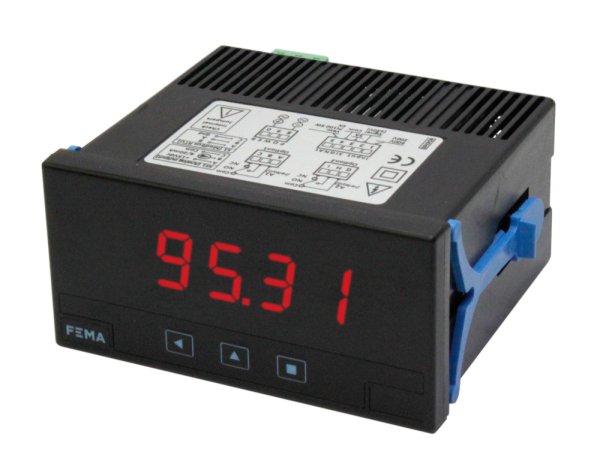
Process control signal conditioners and digital panel meters
A field transmitter, a thermocouple or a load cell rarely produces the signal that a PLC input card, a SCADA system or an operator display expects. The signal may be too small, at the wrong level, or tied to a ground that the control system should not share. Signal conditioners convert, isolate and scale it, and digital panel meters show the value at the panel. Our process control signal conditioners and digital panel meters allow the panel builder or maintenance engineer to bring field signals into a control system and display them locally, from loop-powered two-wire units to isolated modules and panel mount meters.
Every unit is selected for the signal, supply and mounting a panel requires, and we assist with equipment selection, demonstration and testing support, and technical support after the sale.
Signal conditioners and digital panel meters
We offer a wide range of process control instrumentation commonly found in switchboards, control panels and control rooms in Australia, which can be used for temperature, pressure, flow and level monitoring by conditioning, isolating, scaling and displaying the process signal.
Loop-powered signal conditioners
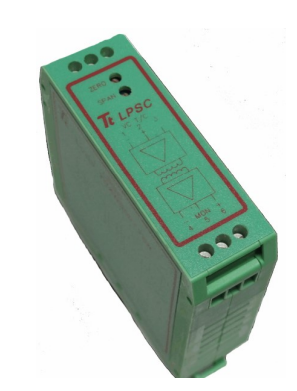
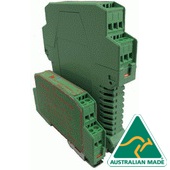
The LPSC series are loop-powered two-wire transmitters. Each one draws its energy from the 4-20mA loop it conditions, so the 4-20mA signal conditioner needs no separate supply wired to it.
High precision signal conditioners
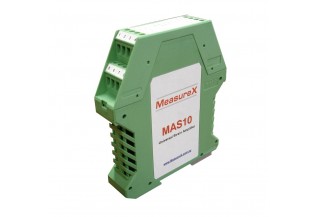
The MAS10 combines a regulated excitation power supply with a low-level amplifier and gives both voltage and current outputs. That pairing suits sensors whose output is only a few millivolts, such as strain gauge bridges and load cells, and the product page lists a strain gauge option.
Signal isolators and isolated process inputs
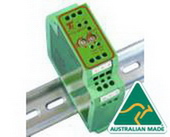
The LRS is a fully floating 4-20mA signal isolator with up to 2500 Vrms of isolation between the input loop and the output loop. The LRD, LRD-24V and LSI series belong to the same family of loop repeaters and isolators. Isolated process input conditioners with a universal 18 to 265 V ac/dc supply cover the case where the signal must be separated and the panel supply varies.
Powered signal conditioners
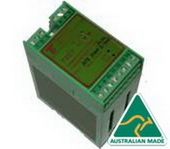
The PSC-TX is a powered signal conditioner that accepts passive or active mA sources, such as field transmitters. It sits in the same family as the TSC and TSCT series.
Trip modules, brake monitors and conveyor monitors
The PTD-VC series is a fully isolated trip amplifier and alarm module that accepts a voltage or current input and provides two independently adjustable trip points. The same family includes brake monitors and conveyor monitors for plant protection.
Pressure gauges, switches and transmitters
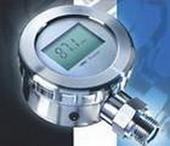
The category also hosts pressure gauges, pressure switches and process transmitters for the pressure side of process monitoring. The ED701 pressure transmitter, for example, is available with a 4-20mA current loop or a voltage output, so it feeds the same signal conditioners and panel meters described here.
Digital panel meters and process panel meters
The FEMA panel meters in the C40-D, M40 and M60-LC series are panel mount meters for monitoring industrial processes, so the operator reads the process value at the panel. These panel mounted digital meters sit at the end of the signal chain, after the conditioner has scaled the signal.
Comparing loop-powered, powered and isolating signal conditioners
All of these units do the same basic job. They take a signal from a field device and turn it into a standard signal that a control system or a display can read.
A loop-powered unit draws its energy from the 4-20mA loop. It suits a panel with no spare auxiliary supply, and it keeps the wiring to two wires.
A powered unit takes its energy from a separate supply. It suits sources that need the extra energy, and it can accept passive or active mA sources.
An isolating unit separates the input loop from the output loop, so a fault or a difference in ground on one side does not pass to the other. Isolation therefore matters where the field wiring and the control system have different earths, or where several instruments share one loop.
Choosing process control signal conditioners for your panel
Start with the signal. What comes in (mA, voltage, a temperature sensor such as an RTD or thermocouple, a load cell), what the PLC or SCADA input expects, and what supply the panel has to offer? Those three answers narrow the choice to a loop-powered, powered or isolating unit, and a separate question decides whether a panel meter is needed to show the value locally.
Are you building a switchboard to a bill of materials, or replacing a failed unit in a running plant? A panel builder usually wants matching units across a whole build, while a maintenance engineer wants the unit that fits the existing wiring. The datasheets list each series, and the engineers can work from your signal list to a shortlist of process control instrumentation for the Australian site.
Selection and technical support
Our engineers help you select the unit, demonstrate it and assist with testing, and they provide technical support after the sale. The equipment is supplied for your electricians to install, and the panel design stays with you.
Frequently asked questions
A loop-powered unit suits a loop where no extra supply is available. A powered unit suits a source that needs auxiliary power. An isolator suits a loop that must be separated from the control system.
A working signal can still carry a ground difference or a fault from one side to the other. Isolation removes that path, and the engineers can tell you whether your wiring needs it.
The PTD-VC series is a trip amplifier and alarm module with an isolated voltage or current input. A signal conditioner and a panel meter can sit alongside it in the same panel.
The datasheets carry the catalogues and series datasheets. The engineers can also talk through a signal list and supply with you before you order.
Talk to our engineers about your panel
Tell us the signals, the supply and the panel you are working on, and we will help match the units to them:
https://www.transtech.com.au/contact-us/